June 5, 2026 • Callum Dray • 8 min reading time • Prices verified June 6, 2026
Australian Manufacturing Heritage: What 'Aussie Made' Actually Means on a Bush Hat Listing
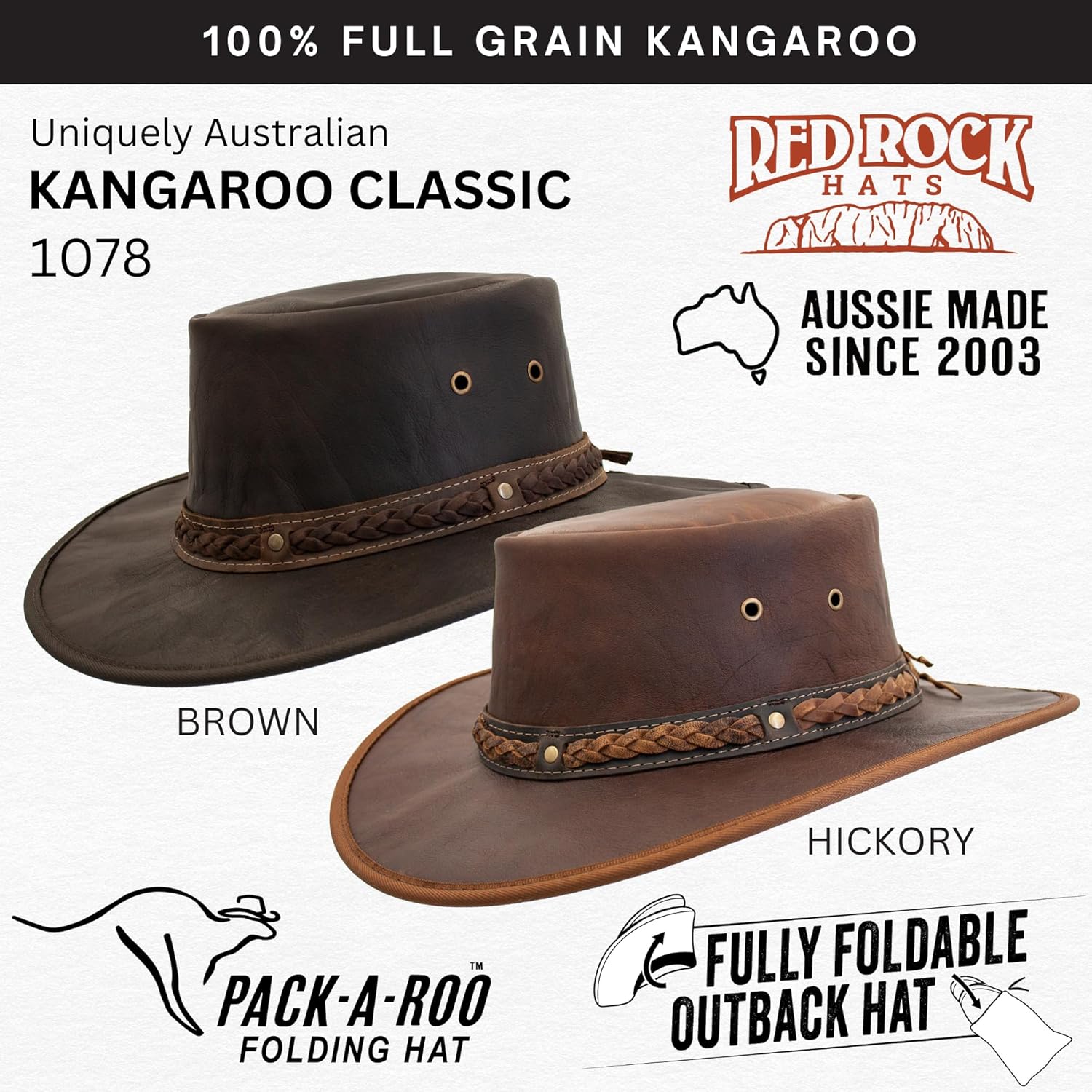
You’ve spotted the words “Australian made” on a bush hat listing and felt a small pulse of confidence — this one’s the real deal. But spend a few minutes reading listings across retailers and you’ll notice those words appear on hats that were blocked in regional New South Wales, hats assembled in Australia from imported felt blanks, and hats that were wholly manufactured overseas and are simply sold by an Australian company. “Aussie made” is doing a lot of different jobs on a product page, and only some of them mean what you’re hoping. This guide is for buyers who already know their Akubra from their Barmah — who understand that fur-felt (hat material made from rabbit or hare fur, pressed and blocked into shape) behaves differently from wool-felt, that brim width is a functional decision, not just a style one — but who want a clearer decision framework for parsing manufacturing claims before committing $200 to $400 on a heritage-grade hat.
If you’re at the stage where you’re comparing listings and noticing the language doesn’t quite stack up, you’re asking the right questions. Here’s how to read the answers.
| EDITOR'S PICK1078 Kangaroo Classic - Austral… | Mid-tier[Outback Trading Company Unisex…](https://www.amazon.com/dp/B004BQ5ZRW?tag=greenflower20-20) | Budget pick[Oztrala HAT Australian Outback…](https://www.amazon.com/dp/B0BKC9YF91?tag=greenflower20-20) | |
|---|---|---|---|
| Material | Kangaroo Leather | Cotton Oilskin | P-Leather Felt Mesh |
| Made in Australia | ✓ | — | — |
| Foldable | ✓ | — | — |
| Bag Included | ✓ | — | — |
| UPF Rating | — | 50 | — |
| Waterproof | — | ✓ | — |
| Price | $125.00 | $79.99 | $69.90 |
| See on Amazon → | See on Amazon → | See on Amazon → |
The Legal Landscape: Three Different Claims, Three Different Standards
Australian consumer law, administered by the Australian Competition and Consumer Commission (ACCC), distinguishes between several distinct origin claims, and the differences are consequential for hat buyers.
“Made in Australia” — under the ACCC’s country of origin framework, this phrase requires that the product was “substantially transformed” in Australia and that at least fifty percent of the cost of producing it was incurred in Australia. Per the ACCC’s guidance document on country of origin claims, “substantially transformed” means the goods have undergone a fundamental change in nature, character, or essential qualities during Australian production. For a hat, that typically means the felt was blocked, shaped, finished, and fitted with a lining and band here — not merely packaged or labelled.
“Product of Australia” — this is the stronger claim. It requires that all significant ingredients or components originated in Australia and that all significant production steps occurred here. For fur-felt hats, achieving this standard is genuinely difficult: most rabbit and hare fur used globally in hat-grade felt comes from Europe (particularly France and Czechoslovakia) or China, meaning very few Australian hats can carry this label without qualification.
“Australian owned brand” or “Australian company” — this is the softest claim and carries no manufacturing obligation at all. An importer with a registered ABN selling Chinese-blocked hats under an Australian brand name can use this language entirely legally.
The Australian Made Campaign Ltd — the body that licences the iconic green-and-gold kangaroo logo — requires products to meet the “Made in Australia” standard above before a manufacturer can display that symbol. If a listing shows the kangaroo logo, that standard has at minimum been self-declared and is subject to Campaign audit. If it doesn’t show the logo but uses the phrase “Australian made,” you’re relying on the brand’s honesty and the ACCC’s enforcement appetite.
By the numbers:
| Claim | ACCC Standard | Local transformation required? | Logo permitted? |
|---|---|---|---|
| Product of Australia | Highest | All significant components + all steps | Yes |
| Made in Australia | Moderate | Substantial transformation + 50% cost | Yes |
| Australian brand / company | None | No | No |
Where the Hat Heritage Tier Actually Manufactures
At the premium end of the Australian bush hat market, the manufacturing story is well-documented and, in most cases, genuinely local.
Akubra is the clearest case. Per Akubra’s own brand materials and extensive coverage in Australian Geographic, Akubra has operated its fur-felt hat factory in Kempsey, New South Wales, since 1958, and the company’s roots go back to the 1870s. The fur (rabbit and hare) is sourced internationally — Akubra has been transparent that domestic fur supply is insufficient for commercial production — but every step of blocking, shaping, finishing, and quality grading happens in Kempsey. Their hats legitimately meet the “Made in Australia” standard. The Smithsonian Magazine’s feature on the craft of the felt hat notes that this level of vertical integration — one factory, long-tenured craftspeople, proprietary blocking machinery — is vanishingly rare anywhere in the world. When you pay $290 to $420 for an Akubra, you are paying for that infrastructure.
Barmah Hats presents a more layered picture. The brand is Australian-owned and has been associated with distinctive leather and oilskin styles, including the well-known Leather Drover shape. However, Barmah’s product range spans price points, and not every item in the range is manufactured to the same local standard. The Barmah canvas crushable at $35–$55 sits in a different production category than a hand-blocked leather piece. The Heddels editorial feature on Australian heritage goods notes this kind of brand-level complexity is common: a single label may carry genuinely local and fully imported products simultaneously, differentiated only by looking carefully at individual item pages for specific manufacturing statements rather than relying on brand-level claims.
Jacaru and Kakadu Traders, who serve much of the mid-range outdoor market at $80–$150, are Australian companies. Their hats typically use Australian-developed designs and are marketed strongly around Australian conditions — UV ratings, oilskin waterproofing, wide territory brims suited to high-sun environments. Buyers comparing the two should check individual product pages carefully; manufacturing location is not always stated uniformly across both ranges.
RM Williams occupies an interesting position. The boot heritage is robustly Australian, but the hat range — which includes wool-felt and leather-banded options — is worth interrogating product by product. The brand’s credibility on footwear does not automatically extend to every accessories category.
How to Read a Listing When the Language Is Soft
You’re on a product page. The description says “proudly Australian” or “inspired by the Australian outback.” Here’s the decision framework:
Step one: Look for the kangaroo logo. The Australian Made Campaign’s logo is the clearest signal of a substantiated claim. Its absence doesn’t mean the hat is imported, but its presence does mean a declaration has been made to a third-party body.
Step two: Find the “Country of Origin” field. Reputable Australian retailers are required under consumer law to disclose country of origin on request, and many do so proactively in product specifications. If a listing page on a major Australian retailer doesn’t state this — and the marketing copy is full of “outback spirit” language — treat that absence as data.
Step three: Distinguish felt source from hat construction location. Even fully Australian-made hats almost always use imported fur. This is not a quality compromise; it is a raw-material reality. What matters for the manufacturing claim is where the transformation happens. A Kempsey-blocked Akubra using French hare fur is an Australian-made hat. A hat blocked in China using the same French hare fur is not, regardless of what the branding implies.
Step four: Apply price as a reality check. Genuine domestic hat-making is labour-intensive. The blocking, steaming, stretching, and finishing of a single fur-felt hat involves hours of skilled work. At $50–$80, a hat cannot be Australian-manufactured in the full sense unless the maker is absorbing significant losses. At that price point, you’re buying Australian-designed or Australian-branded. That may be entirely fine for your use case — an entry-level canvas Barmah for a two-week trip is a reasonable purchase — but it should be a clear-eyed decision, not a misled one.
The Tradeoff: Local Heritage vs. Value-Tier Alternatives
This is where practitioner-level buyers tend to get stuck. You know the Akubra Snowy River ($295–$340, depending on retailer and year) is genuinely made in Kempsey. You know the fur-felt quality grade is documented and consistent. You also know you can find a broadly similar silhouette — wide brim, teardrop crown — in a wool-felt or imported fur-felt hat for $100–$130. What are you actually buying with the premium?
Three things, based on aggregated owner reports and published brand documentation:
1. Felt density and longevity. Owners who report on decade-plus Akubra wear consistently note that the hat’s shape stabilises over time rather than degrading. Fur-felt has a natural resilience that wool-felt and lower-grade imported felt don’t fully replicate at the same blocking tightness. If your hat is going onto a station or into serious high-UV outdoor rotation for five-plus years, the material matters.
2. Repairability. Because Akubra runs a factory with the original machinery, hats can be returned for rebocking — a process of re-steaming and reshaping a deformed crown and brim back to original geometry. That option doesn’t exist for most mid-range and import-based alternatives.
3. The manufacturing heritage itself. This is not purely sentimental. Australian Geographic’s coverage of the Kempsey operation notes that Akubra is one of only a handful of fur-felt hat manufacturers operating continuously in the English-speaking world. Buying one is, in a small way, part of sustaining that capacity. Whether that matters to you is a values decision, not an analytical one — but it’s worth naming explicitly.
If X, then Y — the decision rule:
-
If you’re buying for serious outdoor longevity (5–10+ year horizon, daily or seasonal rotation), station work, or equestrian use: the premium fur-felt tier earns its price. Verify the manufacturing claim using the steps above, prioritise the kangaroo logo, and factor in rebocking availability.
-
If you’re buying for travel, occasional outdoor use, or entry into the category: a quality mid-range option from an established Australian company is a sensible starting point. Be honest about what “Australian” means on that label, and don’t pay a premium for a claim that hasn’t been substantiated.
-
If a listing is heavy on outback imagery and light on manufacturing specifics: assume imported until proven otherwise. Ask the retailer directly. A confident answer, with detail, is a good sign. Deflection is not.
The heritage is real. The manufacturing depth is real, at the premium end. But it only means something if the label you’re reading is actually earning those words — and now you have the framework to check.