May 8, 2026 • Callum Dray • 11 min reading time • Prices verified June 6, 2026
Brim Geometry Is the Real Sun-Coverage Decision: A Buyer's Guide to Width, Curl, and Crown Shape
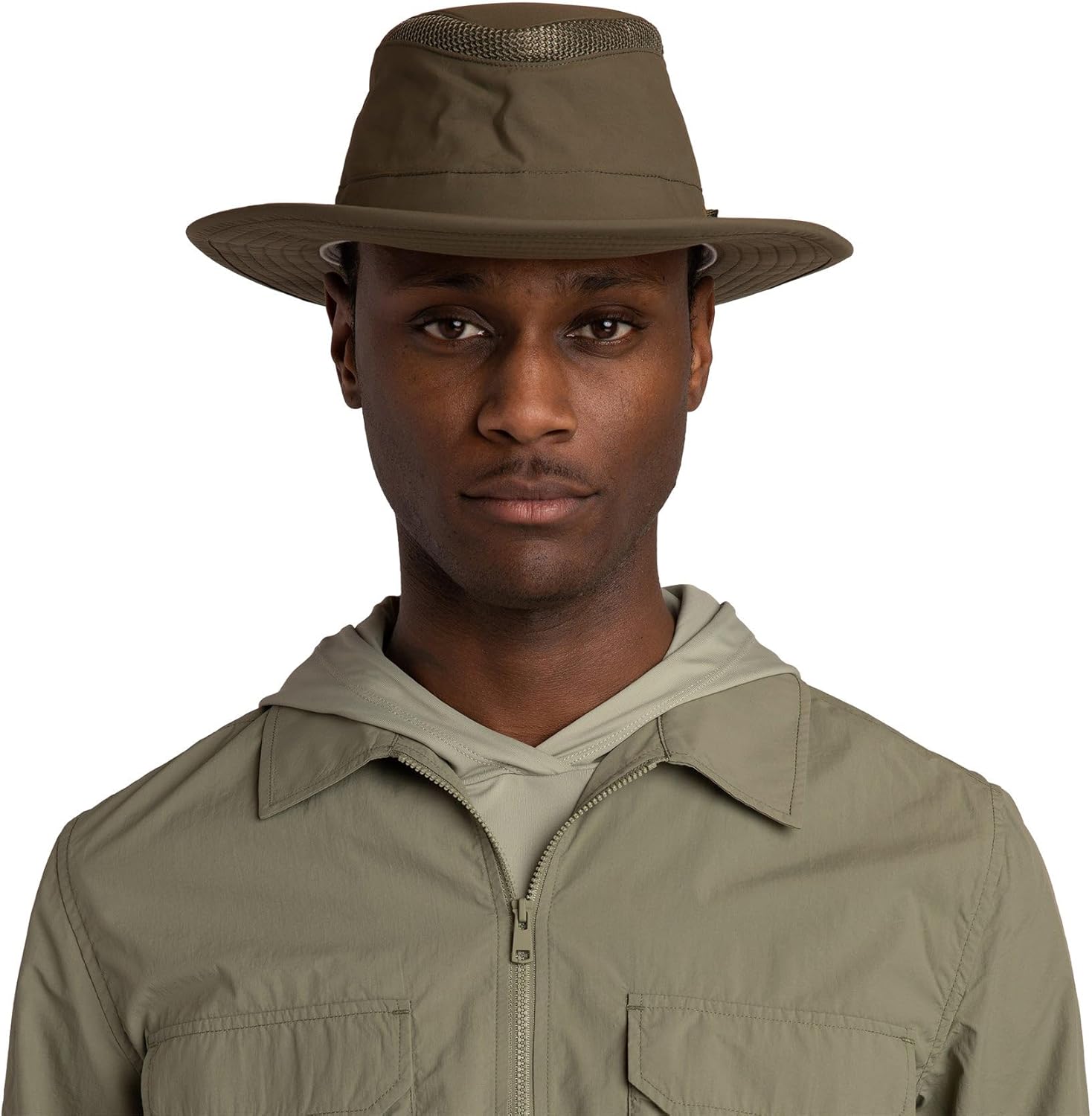
If you have spent any time in the Australian bush — or even just looked up “outback hat” for the first time — you have probably noticed that these hats look deceptively simple. A crown (the part that sits on your head), a brim (the wide horizontal surface that shades your face and neck), and some kind of band around the base of the crown. That’s it. But the specific geometry of those three elements — how wide the brim is, what angle it sits at, whether the edges curl up or down, and how tall and shaped the crown runs — determines almost everything: how much sun you actually block, how the hat fits into your working life, and whether it still looks right after a decade of wear. This guide walks through each of those variables with enough precision that you can read a product listing, compare two hats side by side, and know immediately which one is built for your conditions and which one is built for someone else’s.
Why Brim Width Is Not the Whole Story (But It’s the Starting Point)
The most common mistake buyers make is treating brim width as a direct proxy for sun coverage. It is the primary variable, but it only tells you the story if you also know the brim’s pitch — the angle at which it sits relative to the horizontal — and whether the edge has been shaped, curled, or stiffened.
Here is the basic geometry: a brim that sits perfectly flat, at 90 degrees to the crown, casts a shadow directly proportional to its width. A 100mm (4-inch) flat brim gives you 100mm of shading radius around your head. But most hats are not flat. The brim pitches slightly downward at the front and sides, which effectively increases the shading footprint on your face and neck. Conversely, a brim that curls upward at the sides — what hatters call a “snap brim” or a “pencil curl” (a narrow, tight upward roll at the brim edge) — reduces the side shading while improving sightlines and reducing wind catch.
Australian Geographic’s reporting on UV radiation in Australia notes that UV Index readings in northern Australia regularly exceed 11 — the “extreme” classification — for more than six months of the year. At that intensity, the difference between a 90mm brim and a 120mm brim is not cosmetic. It is the difference between shading your cheekbones or not, between protecting your ears or leaving them exposed.
The practical width tiers look like this:
| Brim Width | Common Application | Side Coverage |
|---|---|---|
| 60–75mm | Town wear, fashion, mild conditions | Minimal — cheekbones only |
| 80–100mm | General outdoor, station work, travel | Good face, partial ear |
| 110–130mm | High-UV fieldwork, equestrian, droving | Full face, ears, upper neck |
| 140mm+ | Territory style, sun-critical occupations | Maximum — can impede vision |
The Akubra Federation, at 112mm of brim, sits at the upper edge of the “general outdoor” tier and earns its reputation as a genuinely functional work hat rather than a dress piece. The Akubra Territory, at 127mm, crosses into the sun-critical tier that Outside Online’s roundup of serious sun hats identifies as necessary for prolonged high-UV exposure.
Curl, Pitch, and the Geometry of the Edge
Once you have your width shortlisted, the curl profile is what fine-tunes the performance. There are four common edge treatments in Australian hats, and each creates a different trade in practice:
Raw or bound flat brim. The brim lies essentially level, with the edge finished in grosgrain ribbon or left raw-folded. Maximum shading efficiency per millimetre of width. Common in quality wool-felt crushables and in the working-grade fur-felt hats. The Akubra Cattleman is a good reference point: the brim is kept close to flat, which is part of why it delivers serious shade despite a “moderate” listed width.
Pencil curl. A tight, narrow roll at the brim edge — typically 10–15mm turned upward. This is primarily an aesthetic finish that originated in dress hats and migrated into bush styles via the drover tradition. It slightly reduces effective side shading but gives the brim a cleaner silhouette and helps the edge resist fraying in fur-felt hats. Heddels’ overview of felt hat construction notes that pencil curling is done while the felt is still warm and pliable after blocking, and that the tightness of the curl is a marker of craft quality — a loose or uneven curl is an indicator of a hurried or mechanised finish.
Regional curl (Snowy River style). The brim curls upward on one or both sides — sometimes quite aggressively, to 30–45 degrees — while remaining flat or slightly pitched downward at the front. This is the signature geometry of the Snowy River silhouette (named for the Banjo Paterson country and the film that re-popularised it globally). The tradeoff is explicit: you gain sightlines on horseback and reduce wind resistance at the sides, but you surrender ear and cheek coverage on the curled side. For equestrian use at lower latitudes, many riders report this as an acceptable exchange. For long days on foot in high-UV conditions, it probably isn’t.
Drover-style front snap. The front brim folds down more steeply — sometimes to a near-vertical angle — while the sides remain relatively flat. This prioritises face shading during work where you are looking down (drafting sheep, fencing, ground-level agricultural work). The Akubra Drover is the canonical example. Country Life’s guide to countryman’s hat selection notes that a snapped-down front brim is a functional rather than fashionable choice, and that buyers who prioritise “the look” over the shading geometry often end up with a hat that doesn’t serve either purpose well.
Crown Shape: The Variable Most Buyers Ignore
The crown has three functional roles: it determines fit (head circumference at the inner band, plus the depth of the head cavity), it affects how the hat sheds wind and rain, and — less obviously — it influences the effective pitch of the brim by raising or lowering the brim’s departure point from the crown sidewall.
The key terms, defined plainly:
- Telescope crown: A crown with a flat top and vertical sides, so it looks like — yes — a telescope or a top hat in profile. Rare in Australian bush hats but found in some fashion-forward Barmah pieces. Holds its shape well because the geometry is inherently rigid.
- Cattleman crown (or “Western” crease): Three creases pressed into the top — one lengthwise down the centre and one on each side of the front — creating a slight pinch at the front. The most common crown shape in the Australian market. Structurally efficient; the creases add rigidity to the crown dome without added material.
- Teardrop or “C” crown: A smooth dome with a single front-to-back crease, rounded at the back. Softer appearance, less structured. Common in mid-range wool-felt and oilskin hats. More susceptible to deformation under sustained rain.
- Open or unblocked dome: Found mostly in canvas Barmahs and entry-level Jacaru pieces. No intentional crease. Relies on the stiffness of the material itself. Crushable by design, which is the point — but does not hold a precise brim pitch under heat and moisture.
Here is where crown shape connects to brim geometry in a way that the product listings almost never explain: a taller crown raises the brim’s pivot point above your ears. A short, shallow crown drops it. A taller crown combined with a downward-pitched brim can actually deliver more shading to the back of the neck — because the brim’s angle relative to the ground is steeper. The Smithsonian Magazine’s piece on wearable shade notes that the geometry of shade-casting is fundamentally trigonometric: small changes in the angle of a shading surface produce non-linear changes in the shadow it casts at low sun angles, which is precisely when morning and afternoon UV exposure is often underestimated.
The practical implication: if you are buying for late-afternoon fieldwork or early starts, a hat with a taller crown and a gently downward-pitched brim will protect you better at oblique sun angles than a shallow-crowned hat with the same brim width.
Stiffness, Material, and Whether the Geometry Holds
Geometry on a spec sheet is one thing. Geometry after six months of hard use is another. The material that holds the brim’s shape — and the quality of the stiffening treatment applied to it — determines whether you own the hat you bought or a slumped approximation of it.
Fur-felt (hare and rabbit fur, blended and hood-formed) is the benchmark for shape retention in the Australian premium market. Akubra’s published specification notes that their hoods are worked through multiple steaming, blocking, and stiffening stages before the final brim profile is set. Owners in long-run reviews — including sustained commentary aggregated across Australian outdoor retailers — consistently report that a properly cared-for fur-felt Akubra holds its blocked brim pitch for well over a decade with minimal reshaping needed.
Wool felt is softer and more susceptible to rain deformation, but a quality wool-felt hat from a maker like Barmah or Kakadu Traders, stiffened with a shellac or synthetic stiffener at the brim edge, will hold its geometry through reasonable outdoor use. The honest caveat from owner reports: wool felt in sustained rain (not just a shower, but hours of wet riding or station work) will soften and the brim will droop. Reshaping while warm and allowing it to dry on a hat block corrects this, but it requires knowing to do it.
Oilskin hats (the Kakadu Traders drover range is the most widely reviewed in this category) hold brim geometry via a wire or stiffened-cord insert in the brim edge. The geometry is fixed and will not soften in rain — which is the core advantage for droving and station use — but it cannot be reshaped if it is bent.
The decision rule here is blunt: if you are in a high-UV, high-rain environment, fur-felt at the premium tier or a wire-brimmed oilskin at the mid-tier will hold their geometry; a wool-felt crushable, however good it looks in the shop, will gradually lose brim pitch under sustained wet conditions and migrate toward a less protective shape.
Putting It Together: The “If X, Then Y” Decision Frame
You have read the variables. Here is how to apply them when you are comparing two hats with a purchase pending:
If your primary condition is sustained high-UV outdoor work (north of the Tropic of Capricorn, full days outdoors): You need 110mm+ brim width, a flat or forward-pitched profile (no aggressive side curl), and a fur-felt or oilskin construction that will hold that geometry under heat and sweat. The Akubra Federation or Drover, or the Kakadu Traders full-brim drover in oilskin, are the reference points from published specs and owner-report patterns.
If your use case is equestrian, including competition and long riding: A moderate curl on the sides (Snowy River profile) is a legitimate trade for sightlines and wind resistance. Brim width in the 95–115mm range is appropriate. Fur-felt holds its blocked curl; wool-felt may not over a full season.
If you are buying for travel — mixed urban and outdoor use, carry-on friendly: The crushable geometry matters more than maximum width. A Barmah wool-felt or canvas hat in the 85–100mm brim range, with a pencil curl that snaps back reliably after packing, is the documented sweet spot from aggregated travel reviews. You are accepting reduced sun-protection efficiency in exchange for practicality. That is a legitimate choice at this use level — just make it consciously.
If you are at the entry tier ($30–$60) and considering an upgrade: The spec to watch is whether the brim has a stiffening treatment or a wire insert. An entry-level Jacaru or Barmah canvas hat without a stiffened brim edge will lose its geometry faster than the price difference to the next tier up would suggest. The upgrade is usually worth it if you plan to wear the hat in conditions rather than occasionally.
Brim geometry is, in the end, a set of honest tradeoffs between coverage, practicality, aesthetics, and material longevity. The hats that earn long-term loyalty — and the premium price that goes with them — are the ones where the geometry was designed for a real working condition and built in a material that holds it. Know what condition you are buying for, and the right geometry follows.