April 8, 2026 • Callum Dray • 9 min reading time • Prices verified June 6, 2026
Making a Serious Bush Hat Last 20 Years: Care, Cleaning, and Reshaping for Felt and Leather
A quality Australian bush hat — the kind built from fur-felt (compressed rabbit or hare fur, matted under heat and pressure into a dense, weather-resistant shell) or premium wool-felt — is not a seasonal accessory. It is closer to a long-cycle tool, engineered for daily abuse across decades. The problem is that most buyers invest $250–$400 in a heritage-grade piece and then apply the same casual maintenance they’d give a $40 synthetic cap. Felt, unlike fabric, is a non-woven structure: there are no threads to unravel, but there are fibres to crush, oils to migrate, and shape memory to destroy if you handle it wrong. This article is a decision-framework for the buyer who already owns or is about to own a serious hat — Akubra, Barmah blocked felt, RM Williams, or comparable — and wants to know exactly what interventions are worth making, in what order, and when to accept that a particular repair is beyond DIY territory.
What you’ll get here: a care sequence mapped to the hat’s actual life stages, honest tradeoffs on the most contested techniques (steam reshaping, sweatband conditioning, wet cleaning), and a clear if-X-then-Y decision rule at each fork.
The 20-Year Logic: Why Felt Ages Well or Badly
Fur-felt hats — particularly the X-grade (a quality rating used by Akubra and comparable makers to denote higher rabbit-fur content and finer felt density) and above — are routinely documented lasting 20–40 years in working pastoral conditions. Australian Geographic’s profile of Akubra’s Kempsey factory notes that some station families pass the same hat through two generations of daily use, with only crown restoring and sweatband replacement along the way. That longevity is not accidental. It is the product of two converging factors: material density (higher X-grade felt resists crush and moisture penetration better than entry-level pressed wool) and proactive maintenance that preserves the felt’s natural lanolin — the same oil found in sheep’s wool that gives felt its water-beading quality.
The failure modes are consistent across owner reports and care documentation: sweatband rot from salt accumulation, brim distortion from improper storage, and felt surface degradation from solvent-based cleaners that strip natural oils. None of these are dramatic events. They are slow-process failures that a simple maintenance schedule prevents almost entirely.
By the numbers — approximate service intervals under regular use:
| Component | Cleaning / Treatment Interval | Replacement Threshold |
|---|---|---|
| Sweatband (leather) | Condition every 6–12 months | Cracking or delamination |
| Felt surface | Brush weekly; spot-clean as needed | Rarely — reshaping extends life indefinitely |
| Crown shape | Reblock after heavy crush or 3–5 years | N/A (professional reblocking restores original shape) |
| Hat band / pugaree | Inspect annually | Fading, loosening, or structural fraying |
A pugaree, for readers new to the term, is the cloth band wrapped around the hat’s crown — often a twist of cotton or silk — that serves both as decoration and as a functional sweat barrier between the felt and the wearer’s head.
Brushing, Drying, and the Rules You Can’t Bend
The single most impactful maintenance habit is also the cheapest: brushing. Heddels’ felt hat care guide is explicit on technique — always brush counterclockwise when viewed from above, following the lay of the felt fibres. Brushing clockwise raises the nap in the wrong direction, creating a rough surface that traps more dust and accelerates fibre breakdown. A natural-bristle hat brush (horsehair or boar) is the correct tool. Synthetic brushes generate static that pulls fibres out rather than realigning them.
After rain or heavy sweat exposure, the correct protocol is: reshape the crown and brim by hand while the felt is still damp (felt is most pliable wet), then set the hat upside-down on its crown on a clean surface and let it air-dry away from direct heat. Direct heat — sunlight through a car windscreen, a heater vent, a dryer — is the fastest way to shrink and stiffen felt irreversibly. Country Life’s guide on felt hat care reinforces this point, noting that even moderate heat applied while the felt is damp will cause the fibres to set in a compressed, hardened state that no amount of steaming will fully reverse.
Storage is the other non-negotiable. Felt has shape memory, but that memory can be overwritten by sustained pressure. Leaving a hat brim-down under other gear for three months will reshape it. The correct options: hat box (crown down on a padded insert), a hat stand, or hanging on a wide peg that supports the crown interior. Never hang a felt hat on a narrow hook — the hook deforms the crown from the inside.
Steam Reshaping: The Right Tool for a Specific Job
Steam is the most powerful DIY reshaping tool available to a hat owner, and the most frequently misused. The principle is straightforward: heat and moisture temporarily relax the felt fibres, allowing them to be repositioned; as the hat cools and dries, the fibres re-set in the new position. Akubra’s official care documentation acknowledges steam reshaping as appropriate for light crown and brim corrections.
The practical tradeoffs:
A domestic clothes steamer or the steam nozzle of an iron (never the iron’s plate) held 3–5 cm from the felt surface will give you enough heat and moisture for minor corrections — a brim that has curled unevenly, a crown that has been pushed to one side. Apply steam in short passes, reshape by hand immediately, and hold the position as it cools. Do not over-steam: prolonged moisture exposure in a single session can cause the felt to temporarily lose structural integrity, and if you reshape it incorrectly in that window, you have created a new problem.
The tradeoffs to name explicitly:
- Steam works best on X-grade and above fur-felt. Lower-density wool-felt can over-soften and may not re-set cleanly. If you are working with a budget wool-felt hat, test on a small, hidden section of brim first.
- Repeated steam cycles weaken felt over time. Owners who steam-reshape seasonally report reduced stiffness in the brim after 8–10 cycles. The correct approach is to reshape once cleanly and then maintain that shape through proper storage.
- A badly deformed hat is a professional job. If the crown has been crushed flat, or the brim has a persistent roll that steam hasn’t corrected after two careful attempts, the hat needs to go to a hatter for reblocking — a process where the hat is wetted, stretched over a wooden block matching the original crown shape, and dried under tension. Outside Online’s gear longevity coverage notes that professional reblocking for a premium hat is almost always cheaper than replacement, and restores the hat to a condition indistinguishable from new.
The Sweatband: The Component Most Owners Neglect
The leather sweatband — the strip of smooth leather stitched to the interior base of the crown that sits against the forehead — is the component that fails first in most neglected hats. Salt from sweat is hygroscopic (it draws moisture from the surrounding material), which means an unconditioned sweatband cycles between wet and dry repeatedly, eventually cracking and delaminating from the felt. Once the sweatband separates, sweat migrates directly into the felt, creating a tide-line stain that is extremely difficult to remove.
The maintenance protocol is simple: wipe the sweatband with a damp cloth after heavy sweating, allow it to dry fully, then apply a thin coat of leather conditioner — neatsfoot oil or a lanolin-based conditioner — every six to twelve months depending on use intensity. Heddels’ care documentation notes that petroleum-based conditioners can soften leather too aggressively over repeated applications; a water-based lanolin conditioner maintains suppleness without over-softening the leather’s structure.
When the sweatband is past conditioning, replacement is a straightforward milliner repair — most Australian hat retailers who stock Akubra carry replacement sweatbands, and any competent saddler or leather worker can stitch a new one in under an hour. This is worth doing rather than tolerating a damaged band: a failed sweatband is also the point at which the hat’s interior starts to smell, and felt absorbs odour deeply.
Cleaning the Felt Surface: When to Intervene and When to Leave It Alone
Felt is not fabric. It does not respond well to soaking, scrubbing, or most commercial hat cleaners that contain alcohol or synthetic surfactants. The interventions worth knowing, ranked by invasiveness:
Dry brushing handles dust and light surface contamination. This is the first and usually sufficient response to anything that hasn’t soaked in.
A slightly damp cloth, wrung nearly dry, can address localised dust or light surface marks — press gently, do not rub. Allow to air-dry completely before wearing or storing.
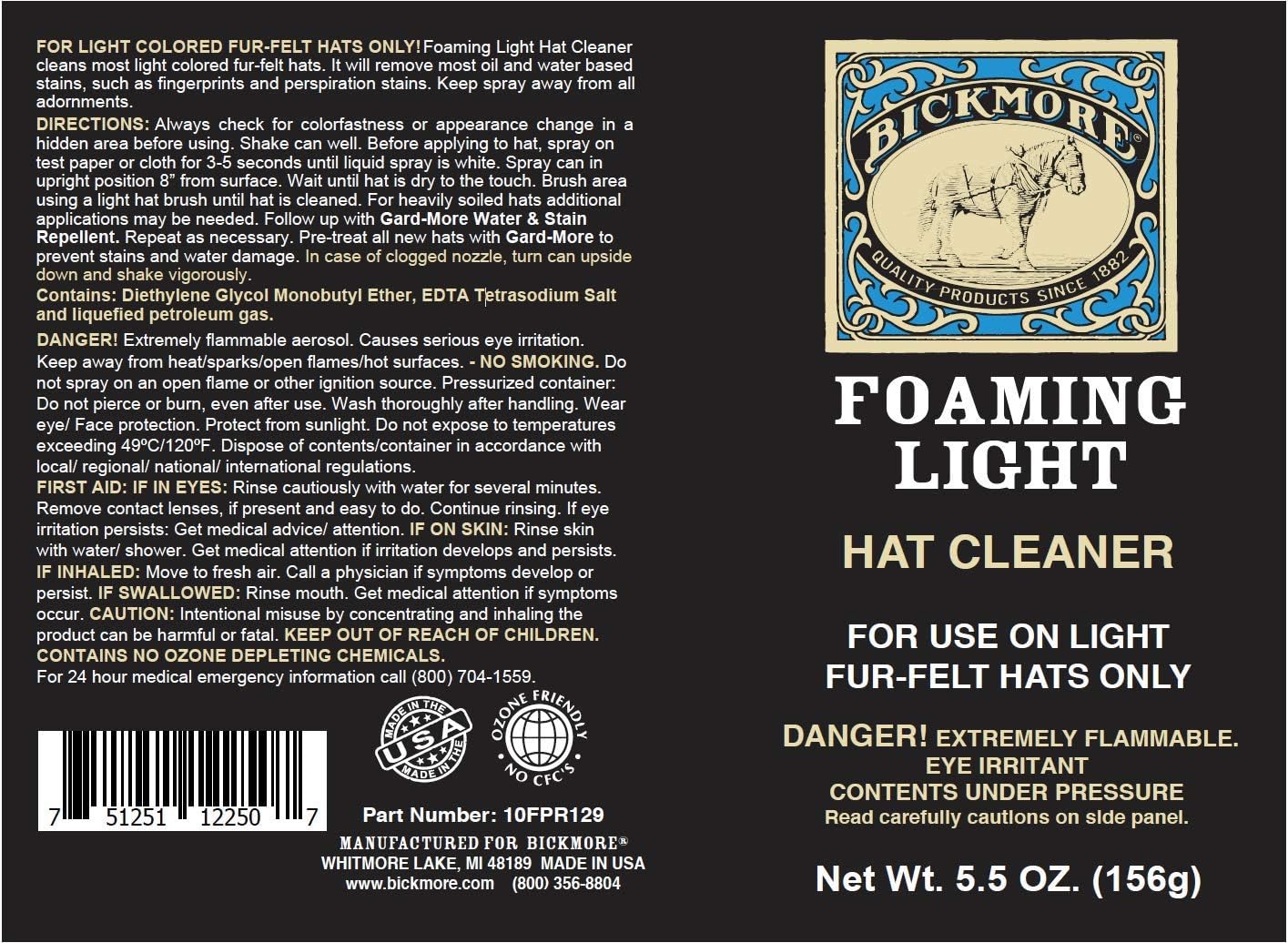
A felt-specific cleaner or a diluted solution of mild wool-wash is appropriate for sweat tide-lines or greasy marks. Apply sparingly to a cloth rather than directly to the hat, work in the direction of the felt nap, and allow to dry fully. Country Life’s hat care guide explicitly warns against anything containing bleach, ammonia, or acetone — these strip the natural oils from the felt and create a dull, brittle surface that accelerates fibre breakdown.
What not to attempt at home: waterline stains that have penetrated to the felt’s mid-layer, mould (which can colonise felt stored damp), or oil stains from machinery or animal product. These require professional dry-cleaning by a hatter who understands felt chemistry. Australian Geographic’s coverage of pastoral hat culture notes that Akubra’s own service centre in Kempsey offers cleaning and restoration — a fact worth knowing if you are holding a $300+ hat with a stain you cannot confidently address yourself.
The Decision Rules
If you want a 20-year hat, the choices at each fork are not complicated — they just require consistency:
- If the hat has been rained on heavily: reshape damp by hand, dry upside-down on the crown, away from heat. Do not wait until it dries in a distorted shape.
- If the brim or crown has deformed: steam-reshape once, carefully. If two careful attempts haven’t corrected it, take it to a hatter for reblocking rather than compounding the damage.
- If the sweatband is cracking or separating: condition immediately if early-stage; replace if delaminated. Do not let sweat migrate into the felt.
- If you have a stain: dry-brush first. If that fails, damp-cloth with minimal moisture. If that fails, wool-wash solution applied by cloth. If that fails, it’s a professional job — do not escalate to solvents.
- If you are storing for more than two weeks: hat box or hat stand, crown supported, no sustained pressure on the brim.
The 20-year hat is not a romantic idea. Owners across aggregated hat forums and review records consistently report that heritage-grade Australian fur-felt hats outlast this timeline with nothing more exotic than regular brushing, dry storage, and occasional sweatband conditioning. The investment in a $300 Akubra or a blocked Barmah becomes genuinely cost-effective when amortised across two decades of daily use — but only if the care habits are built in from the first season, not retrofitted after the first serious damage.