April 25, 2026 • Callum Dray • 10 min reading time • Prices verified June 6, 2026
UPF Ratings and Real Sun Coverage: What the Numbers Mean for Australian Conditions
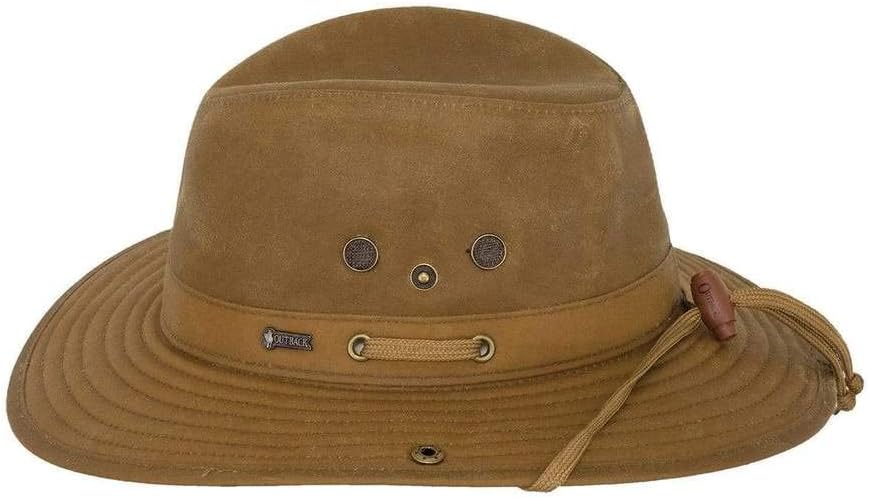
If you’ve spent any time comparing Australian bush hats online, you’ve probably noticed that some listings trumpet a “UPF 50+” rating while others say nothing at all — and you’re left wondering whether that number actually changes anything once you’re standing in the full glare of a January noon in central Queensland. UPF, which stands for Ultraviolet Protection Factor, is a standardised measure of how much UV radiation a fabric blocks before it reaches your skin. Think of it like SPF for sunscreen, but applied to textiles: a UPF 50 rating means only 1/50th of UV radiation passes through the material. That sounds reassuring, but the number on the label only tells you about the fabric itself — it says nothing about brim width, crown ventilation, weave tightness under stretch, or whether the hat’s geometry actually puts that fabric between the sun and your face, neck, and ears. This guide is for the buyer who already knows the difference between an Akubra fur-felt and a canvas Barmah, and wants to know what UPF numbers genuinely predict — and where they stop being useful.
| EDITOR'S PICK[Outback Trading Company Unisex…](https://www.amazon.com/dp/B0047UTMN0?tag=greenflower20-20) | Mid-tier[Sunday Afternoons Montana Hat L…](https://www.amazon.com/dp/B0061QLHMC?tag=greenflower20-20) | Budget pickOversize XL XXL Large Wide Brim… | |
|---|---|---|---|
| UPF Rating | UPF 50 | — | UPF 50+ |
| Material | Cotton oilskin | — | — |
| Waterproof | ✓ | — | ✓ |
| Chin Strap | — | — | ✓ |
| Size Range | Large | Large | XL-XXL |
| Price | $79.99 | $76.00 | $23.99 |
| See on Amazon → | See on Amazon → | See on Amazon → |
What UPF Actually Measures (and What It Deliberately Ignores)
The Australian and New Zealand standard for sun-protective clothing, AS/NZS 4399:1996, published by Standards Australia, is the benchmark most reputable Australian hat makers cite when they assign a UPF rating. The test involves measuring the transmittance of UV radiation — both UVA (320–400 nm) and UVB (280–320 nm) wavelengths — through a swatch of fabric in a laboratory spectrometer. The result is expressed as a single protection factor number. A rating of UPF 15–24 is classified as “good protection,” 25–39 as “very good,” and 40–50+ as “excellent.”
The critical word is swatch. The fabric is tested flat, unstretched, and dry. This matters enormously for hat buyers because:
Weave changes under tension. A loosely woven canvas hat that earns UPF 50 in a flat swatch can drop significantly when the crown is blocked and pulled taut over a form, or when the brim is manipulated into a drover’s curve. ARPANSA’s guidance on UV and outdoor worker protection notes that fabric structure — thread count, fibre type, and weave tightness — can shift meaningfully with physical stress.
Wet fabric performs differently. Some fibres, including certain wool weaves, tighten when damp and improve their UV block. Others, including some cotton canvases, open up and lose 30–50% of their rated protection when wet, according to Skin Cancer Foundation hat and headwear UV protection guidelines.
Colour matters, but not the way marketing implies. Darker dyes do absorb more UV radiation in general, but the effect is secondary to weave density and fibre type. A tightly woven natural straw is not reliably inferior to a loosely woven dark canvas just because of colour.
For fur-felt and wool-felt hats — the Akubra territory — the UPF story is a different one. Hatters’ felt is a compressed, non-woven material. There is no weave to stretch or distort. The density of a quality fur-felt hat body (measured in internal industry grades but published in Akubra’s product literature as felt weight and quality tier) is extremely consistent across the crown and the majority of the brim. Cancer Council Australia’s SunSmart program has consistently noted that tightly constructed fabrics with no visible holes or gaps offer the best UV barrier — and a well-blocked fur-felt brim, under close inspection, has essentially no apertures. This is one under-discussed reason why a heritage Akubra at $220–$320 can outperform a loosely woven synthetic “UPF 50+” hat on actual UV transmittance, even if the synthetic hat has a formal rating and the Akubra is sometimes sold without one.
The Geometry Problem: Why Brim Width Is Doing Most of the Work
Here is the number that hat manufacturers often bury in fine print, but that dermatologists and cancer researchers lead with:
By the Numbers
- A 7.5 cm (3-inch) brim reduces UV exposure to the nose by approximately 30%
- A 10 cm (4-inch) brim reduces nose exposure by approximately 50%
- Ears and neck receive meaningful coverage only above approximately 7.5 cm
- A full-circumference 10 cm+ brim (not a fashion-asymmetric shape) is needed to protect the lower face and neck simultaneously
(These figures are drawn from Cancer Council Australia SunSmart program materials on hat effectiveness and the Skin Cancer Foundation’s headwear guidance, both of which reference UV dosimetry studies on hat geometry.)
The practical implication is stark: a hat with a 6 cm brim and a UPF 50 fabric rating is, in real outdoor conditions, offering less sun protection than a hat with a 10 cm brim made from un-rated fur-felt — because the wider brim intercepts the sun’s angle before it ever reaches your skin. The UPF of the material is irrelevant if the geometry isn’t delivering shade in the first place.
This is why the classic Territory silhouette — a full-brim, low-crown shape common in working Australian hats from Akubra’s Territory and Stylemaster models through to the Barmah wide-brim range — consistently performs better for sun coverage than the narrower-brimmed Snowy River silhouette, which is better optimised for equestrian riding in variable light than for stationary or walking exposure in full sun.
For buyers coming from the Jacaru and Kakadu Traders mid-range: these makers are generally honest about brim measurements in their product specifications, and the 10–11 cm brims on models like the Kakadu Traders 5X Fur Felt drover are doing more protective work than any UPF label. Owners consistently report — across aggregated reviews on outdoor and equestrian retail sites — that it’s the brim that determines end-of-day comfort, not the number printed on a swing tag.
How Material Tier Correlates With UV Performance (When Geometry Is Equal)
Once you’ve established that your candidate hat has an adequate brim — call it 7.5 cm as a minimum for general use, 10 cm+ for station work or prolonged outdoor exposure — material quality becomes the relevant differentiator.
Fur-felt (hare and rabbit fur-felt, as used by Akubra): Non-woven, dense, dimensionally stable. Offers very high UV blockage by construction, even without formal rating. A quality Akubra body does not stretch, does not have apertures in the weave, and does not degrade its UV barrier when damp. Owners who have worn these hats in sustained outdoor work for a decade — a common report in long-run Akubra owner discussions — note that the hat’s protective geometry is preserved as long as re-blocking is performed when the crown softens, which typically means every few years for daily use.
Wool felt (heavier crushable styles, including some Barmah and mid-tier offerings): Generally performant but more variable. Wool felt can compress unevenly with heavy use, and lighter-weight wool felts may develop thin spots over years of heavy sweating — a point that surfaces in owner reports for entry and mid-range wool crushables. At the $80–$150 tier, this is worth factoring into longevity expectations.
Oilskin and waxed cotton (drover styles from Kakadu Traders, some RM Williams-adjacent offerings): Oilskin is an interesting UV case. The wax treatment itself adds a UV-blocking layer over the fabric substrate, and waxed cotton with a full wax coat can perform reasonably well. But the critical maintenance note — one that a surprising number of buyers miss — is that a dried-out, partially de-waxed oilskin has significantly compromised UV performance compared to a freshly treated one. If you’re relying on an oilskin drover for sun protection in a professional outdoor context, re-waxing on schedule is not optional.
Canvas and synthetic-canvas (entry Barmah, entry Jacaru): These are the materials most likely to carry formal UPF ratings, and also the materials where the swatch-vs-real-world gap is most significant. A UPF 50 canvas hat that is well-structured and not over-stretched is a valid sun-protection tool. The rider is that canvas can lose structural integrity around the brim edge and crown over 2–3 seasons of heavy use, and a brim that has begun to droop or deform is no longer delivering the geometry it started with.
Reading Labels and Marketing Claims Without Getting Burned
The UPF label on an Australian hat should tell you:
- Which standard was used — look for AS/NZS 4399 or equivalent. A generic “UPF 50+” with no standard cited is unverified.
- The tested material — some labels test the fabric but not the finished hat. This matters if the hat uses different materials in the crown versus the brim.
- Whether it applies to the whole hat or a component — this is almost never disclosed clearly in retail marketing, which is why treating the geometry question as primary is good discipline.
What UPF labels will not tell you:
- How the hat performs when the brim deflects or the crown is pinched habitually
- Whether the brim is wide enough to matter
- Whether the hat maintains its structure across seasons of real use
Cancer Council Australia’s SunSmart recommendations for hats in Australian UV conditions are consistent and worth internalising: a broad-brimmed hat (minimum 7.5 cm, preferably 10 cm+), full circumference coverage, worn in conjunction with SPF 30+ sunscreen on exposed areas. The hat, in their framing, is one layer in a system — not a standalone solution. ARPANSA’s outdoor worker UV guidance echoes this, recommending wide-brimmed hats as part of a layered approach alongside UV-protective clothing and scheduling work outside peak UV index windows (10 am–2 pm in most of Australia, extended in tropical latitudes and summer months).
The Decision Frame: If X, Then Y
You’ve read the spec sheet, you know the brim measurement, you’ve looked at the UPF label. Here’s how to translate that into a purchase decision:
If brim width is under 7.5 cm: The UPF number is largely academic. The hat is not covering the geometry needed for meaningful sun protection in Australian field conditions. Buy the hat for style or shape if you want it, but supplement with sunscreen and neck-protection clothing rather than relying on the hat as your UV defence.
If brim width is 7.5–10 cm and material is canvas or woven synthetic: Confirm whether a formal UPF rating was obtained, and look for AS/NZS 4399 on the label or specification sheet. Acceptable for moderate use; monitor brim integrity seasonally.
If brim width is 10 cm+ and material is quality fur-felt or wool-felt: You are in territory where sun protection geometry is sound and material UV blockage is high by construction, even without a formal rating. Maintenance (re-blocking fur-felt, re-waxing oilskin) is the primary variable keeping performance consistent across years.
If you’re buying for station work, prolonged outdoor exposure, or a high-UV equatorial or tropical Australian latitude: The 10 cm+ full-circumference brim is non-negotiable. The fur-felt construction tier is worth the premium — not primarily for the UPF number, but for the decade-long dimensional stability that keeps the protective geometry where it should be. Owners who’ve worked in far-north Queensland and the Kimberley consistently report that hat shape integrity over years, not the number on the tag, is what determines whether a hat is still working for them at the five-year mark.
The UPF label is not useless — it confirms that a material meets a baseline standard, which matters for entry-level canvas options where quality is more variable. But for the considered Australian bush hat buyer, brim geometry is the primary variable, material durability is the secondary variable, and UPF rating is a useful third-order confirmation rather than the headline number it’s often marketed as. Buy the brim width first. Let the material quality and rating follow from there.