May 16, 2026 • Callum Dray • 10 min reading time • Prices verified June 6, 2026
Wool Felt vs. Fur Felt: What Published Specs Actually Tell You About Outback Hat Quality

If you’ve spent any time shopping for a serious Australian bush hat — the kind that sits on the peg for thirty years rather than thirty days — you’ve probably run into the terms wool felt and fur felt without a clear explanation of what the difference actually means in practice. Felt, in this context, is not woven fabric. It’s a compressed mat of fibres — either sheared wool or the fine underfur of animals like rabbit or hare — that have been matted, shrunk, and shaped under heat and pressure into a stiff, weather-resistant shell. The distinction matters because those two raw materials behave very differently once they’re shaped into a hat and exposed to Australian conditions: high UV, dust, sudden downpours, and the mechanical wear of being pulled on and off a head dozens of times a week. This article walks through what published manufacturer specifications and named editorial sources actually reveal about each material — and gives you a decision framework for matching felt type to your specific use case, budget, and expected lifespan.
The Fibre Difference: What’s Actually Inside the Hat
The starting point is the fibre itself, and this is where most buyers get vague information.
Wool felt is made from the clipped fleece of sheep — the same fibre used in woollen clothing, but processed without a woven structure. The fibres are laid in layers, exposed to heat, moisture, and mechanical agitation, and they interlock through a process called fulling. The result is a dense, uniform sheet that can be blocked (shaped over a wooden or metal mould) into a crown and brim. Wool felt is the more economical of the two materials to produce, which is why it dominates the $30–$150 tier and why makers like Barmah, Jacaru, and the lower lines of Kakadu Traders use it for crushable and packable styles.
Fur felt — also called fur-felt or, in premium contexts, beaver-blend felt — uses the fine underfur of animals, most commonly rabbit or hare in Australian production, occasionally blended with small percentages of beaver for the highest grades. The underfur fibres are shorter, finer, and naturally barbed at a microscopic scale. That barbed structure means they interlock more tightly during fulling, producing a denser, smoother, more uniform felt with a characteristic slight sheen and a noticeably silkier hand. Akubra’s manufacturer specification document, “How Our Hats Are Made” (akubra.com.au), describes their fur felt as sourced from the underbelly fur of rabbits, processed entirely at their Kempsey, New South Wales factory — one of a very small number of facilities globally still conducting the full fur-felt production process in-house.
The practical consequence of that tighter interlock: fur felt sheds water more readily, holds its blocked shape under load and humidity better, and — critically for long-term buyers — tends to respond better to re-blocking and professional restoration after years of heavy use.
Reading Published Specs: The Grading Systems Explained
Once you know the base fibre, you’re still left with the question of quality within that category. Both wool felt and fur felt are graded — loosely and inconsistently across the industry, which is part of why buyers get confused.
Fur Felt Grading: The X System
The most widely referenced grading convention for fur felt uses an “X” count — a holdover from North American hat-making tradition that has become partially standardised in the Australian premium market. The original logic was that higher X ratings indicated a higher proportion of beaver fur in the blend. In contemporary Australian production, where beaver is rarely used, the X count functions more as a proprietary quality indicator than a precise compositional measure.
Heddels’ reference editorial “The Felt Hat Guide: Wool vs. Rabbit vs. Beaver” (heddels.com) notes that the X system “has become largely marketing shorthand” outside of North American makers who still specify beaver content, but that within a single maker’s range it remains a reliable relative indicator. In practical terms, across Akubra’s published range, their workhorse mid-grade models sit lower in the internal quality order than the Snowy River or Stylemaster, with differences reflected in felt density, finish smoothness, and brim stiffness.
Published Akubra grade and geometry indicators:
| Model | Relative Grade | Brim Width (standard) | Recommended Use |
|---|---|---|---|
| Cattleman | Mid | 73 mm | Station work, high-wear |
| Federation | Mid | 73 mm | Everyday, travel |
| Snowy River | Upper-mid | 73 mm | Heritage, equestrian |
| Stylemaster | Premium | 67 mm | Dress, special occasion |
Source: Akubra “How Our Hats Are Made” specification document and published product range.
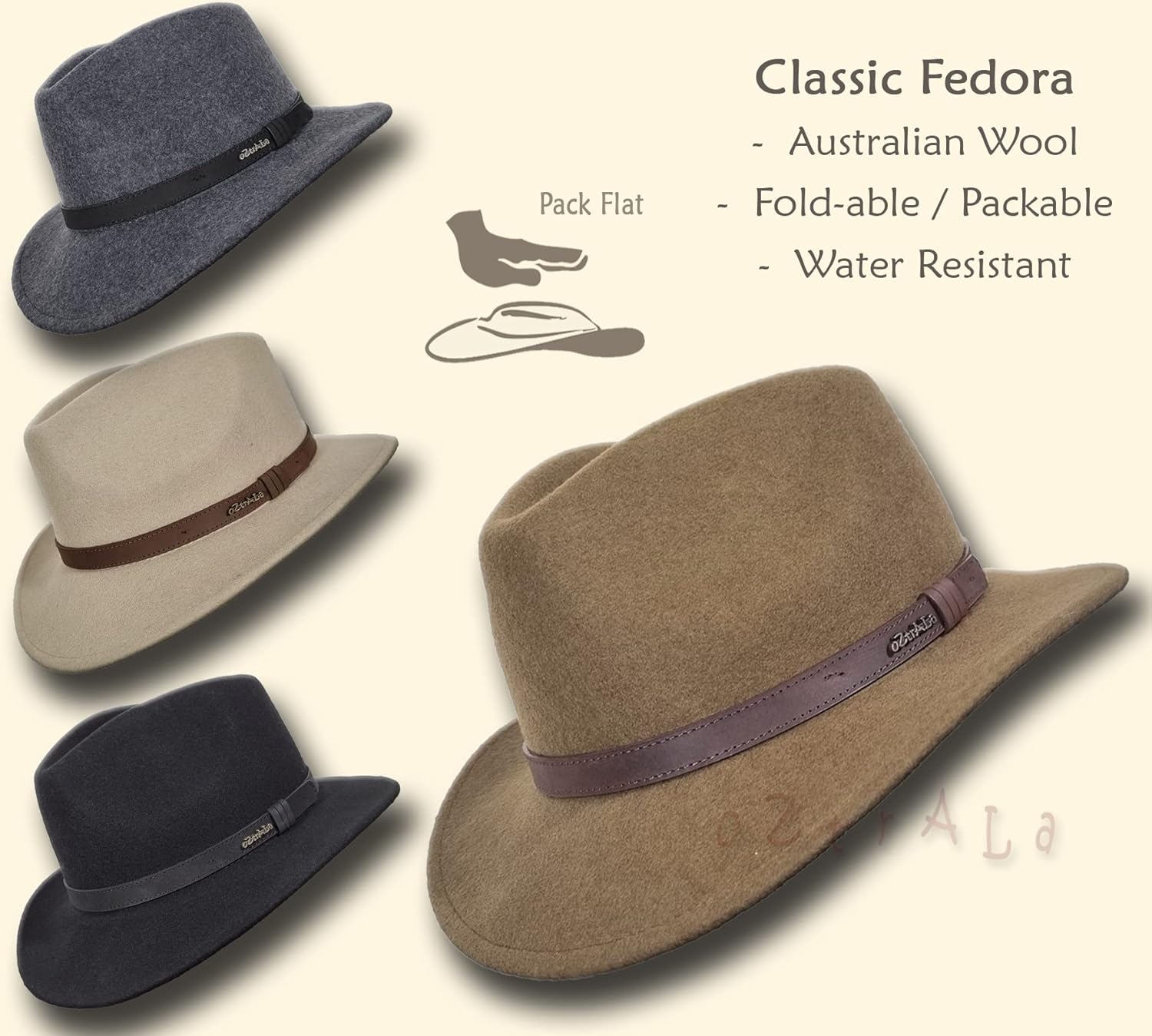
Oztrala】Australian
$95.90
In stock on Amazon
Check price on AmazonWool Felt Grading: Density and Finish as Proxies
Wool felt doesn’t carry a standardised grading system in the Australian market. Country Life’s buyer’s guide “How to Choose a Quality Felt Hat” (countrylife.co.uk) suggests looking at three proxy indicators when a grade isn’t published: felt weight (heavier per unit area generally means denser fibre packing and better shape retention), surface finish (a smooth, slightly napped surface versus a rough or pilling surface indicates finer fibre and better processing), and brim stiffness (a brim that flexes easily and doesn’t spring back is undersized in fibre content regardless of what the label says).
Outside Online’s gear overview “Sun Hats That Actually Work in Extreme Heat” (outsideonline.com) notes that wool felt in the $80–$120 range from makers like Jacaru and RM Williams “tends to perform adequately for short-duration outdoor use but shows accelerated deformation under sustained daily wear” compared to equivalent fur felt at a similar or higher price point. That characterisation aligns with the pattern across aggregated owner reviews: wool felt buyers in the $100–$150 range consistently report satisfaction at the 12–18 month mark but more variable results past the two-year point, particularly on hats that have been wet and dried repeatedly.
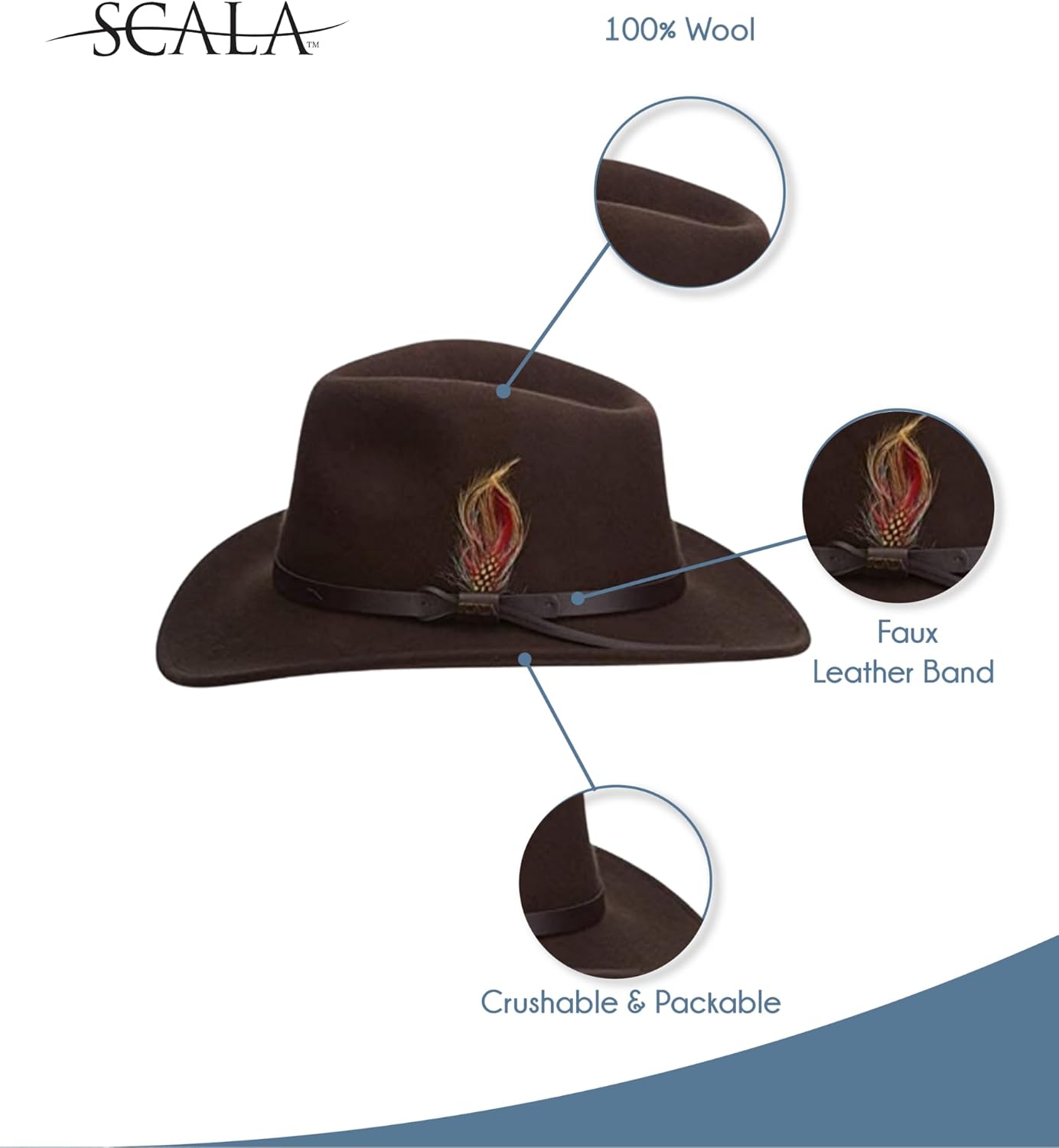
Scala
$79.99
In stock on Amazon
Check price on AmazonPremium Fur Felt: The Re-Blocking Lifespan Argument
The clearest signal in long-run owner reports — documented across specialist retailers and hat enthusiast communities cited in secondary editorial sources — is that felt type is the dominant predictor of decade-plus performance, more than brand loyalty or price within a tier.
Owners of Akubra fur-felt hats consistently report that the hats re-block well after 5–10 years — meaning a hatter can steam and reshape a crown that has taken a dent or a brim that has been rolled in storage. This is the core argument for the $200–$400 tier: you’re not buying a hat, you’re buying a hat plus 20 years of professional maintenance potential. Wool felt at the same age is generally described by owners as “retired” rather than “restorable” — the fibre matrix has fatigued in ways that don’t respond well to re-blocking.
Country Life’s buyer’s guide frames this cleanly: “A fur felt hat properly cared for is a generational object. A quality wool felt hat is a very good tool for its season.” Both are honest use cases. The error is buying wool felt with fur-felt longevity expectations, or paying fur-felt prices for a wool-felt product.
Australian Geographic’s feature “The Hat That Built a Nation” (australiangeographic.com.au) makes the manufacturing-continuity case explicitly: Akubra’s retention of in-house fur-felt processing in Kempsey is described as a direct line to techniques largely abandoned by offshore hat industries, and the traceability of that process — from raw fur to finished hat in a single facility — is presented as both a quality-control advantage and a cultural heritage argument.
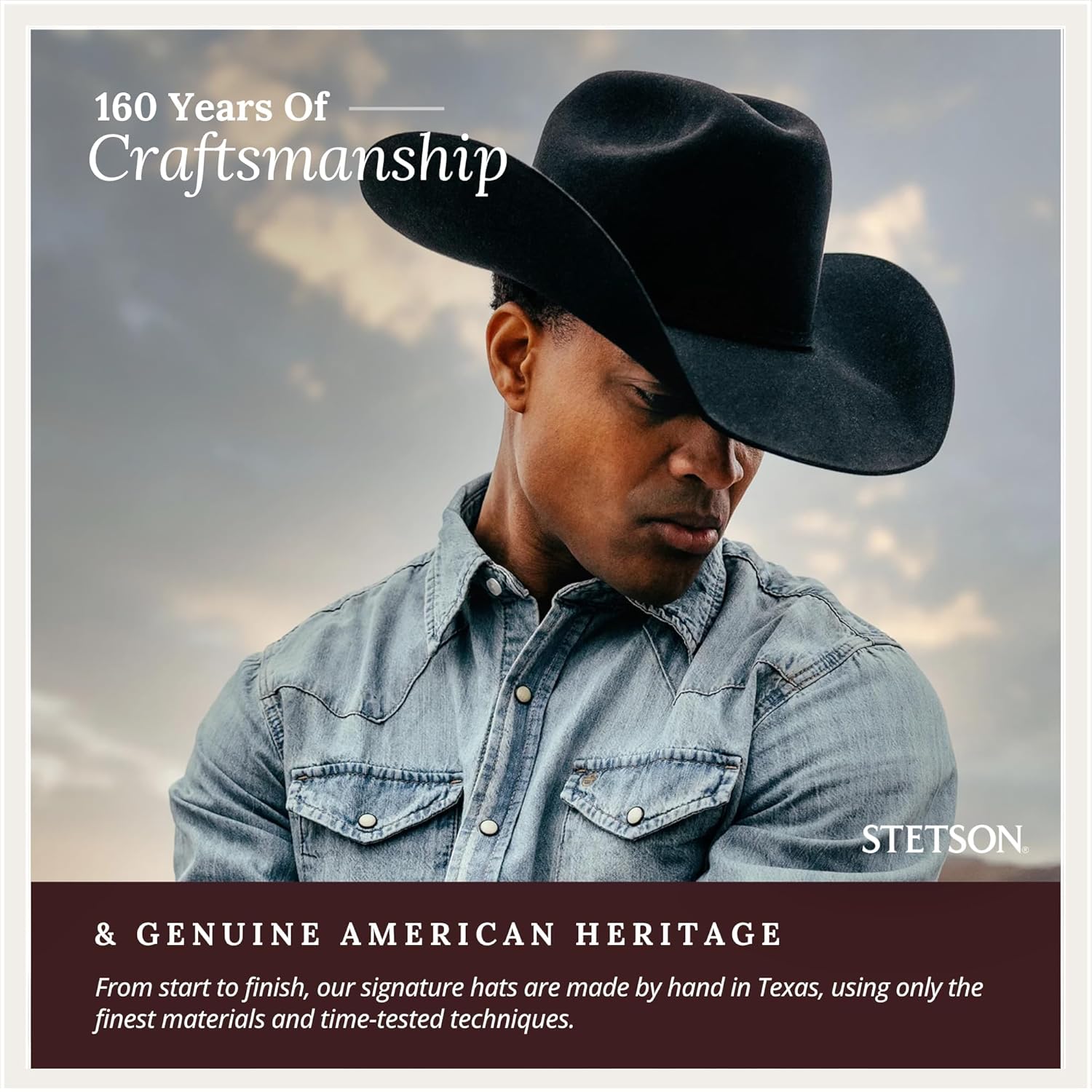
Stetson
$379.99
In stock on Amazon
Check price on AmazonThe Shape Question: Does Felt Type Affect Brim Geometry?
This is where the practitioner-level decision gets more granular. Brim geometry — the width, the curl (a pencil curl is a tight, narrow roll at the brim edge; a Queensland roll is a broader, more dramatic upward curl on one side) — is partly determined by the blocking process, but the felt’s stiffness dictates how well that geometry holds under load and humidity.
A telescope crown — the flat-topped, straight-sided shape seen on classic drover hats — requires a felt stiff enough to maintain its vertical walls without internal boning or wire. Fur felt at mid-to-upper grade holds this geometry reliably. Wool felt, especially in the crushable and packable category (which is, by design, a lower-density felt), cannot. This is not a flaw in wool felt crushables — they’re engineered for packability and spring-back recovery, not architectural rigidity.
The practical split by use case:
- Telescope crown, wide brim (75mm+), equestrian or station use → fur felt is the correct material. Wool felt will sag at the crown walls within 12–18 months of regular wear.
- Open crown, moderate brim (60–70mm), travel or light outdoor use → quality wool felt performs adequately and the weight saving is a genuine comfort benefit in high-heat conditions.
- Crushable and packable, pack travel → wool felt or canvas/cotton is the correct material. Fur felt is not designed for repeated crushing and is not typically sold in crushable formats at any price point.
Heddels’ felt hat editorial reinforces this point directly, noting that crushable construction and premium fur felt are “engineering contradictions — one optimises for compressibility, the other for permanent form.”
The Decision Frame: Matching Felt Type to Use Case
By this point, the tradeoffs are on the table. Here is the decision logic made explicit across three tiers.
Entry Tier: Canvas, Cotton, and Basic Wool Felt ($30–$80)
If you’re entering the category, want to understand the silhouettes before committing, or need a hat that can be lost on a trip without distress, the Barmah canvas range and basic Jacaru entry wool-felt styles give you accurate geometry and Australian design language without the felt investment. Reviewers consistently note these don’t hold their shape past light use, but for the purpose of learning what you actually want in a hat — brim width, crown height, curl style — they do the job at low cost.
Scala
$79.99
In stock on Amazon
Check price on AmazonMid Tier: Quality Wool Felt ($80–$150)
If your use case is serious travel, long-haul driving, or high-UV weekend use — and you want a hat that packs reasonably flat and takes knocks without anxiety — a mid-grade wool felt from Jacaru or Kakadu Traders is the honest recommendation. Outside Online’s gear overview documents consistent owner satisfaction at three to five years of service under these conditions. The caveat, as Country Life’s buyer’s guide notes, is managing expectations: wool felt at this tier is a durable tool, not a restorable heirloom.
Oztrala】Australian
$95.90
In stock on Amazon
Check price on AmazonPremium Tier: Fur Felt ($200–$400+)
If your use case is daily outdoor work, equestrian duty, or station work — and you expect to own the hat for more than three years — fur felt at the $200-plus tier is the correct material. The re-blocking lifespan means the cost-per-year arithmetic favours it decisively over replacing a $100 wool felt hat every two to three years. If you’re buying for heritage, collection, or a single formal hat that will outlast everything else you own, the Akubra Stylemaster, Snowy River, or a bespoke piece from an Australian milliner is the correct answer regardless of price sensitivity. Published specifications and long-run owner reports on 20-year fur felt hats from Akubra’s Kempsey facility are consistent: correctly stored and periodically re-blocked, these hats do not wear out in any meaningful sense.
Stetson
$379.99
In stock on Amazon
Check price on AmazonThe felt type won’t be on the hang-tag in plain language at most retailers. Ask the question directly: Is this wool felt or fur felt? If the retailer can’t answer, that’s information too. The fibre inside the brim is the single most reliable predictor of whether a hat is a seasonal tool or a thirty-year companion — and it’s almost always knowable before you buy.